Have you ever typed “carrer” instead of “career” and wondered if both words are correct? You are not alone. Thousands of people search for the difference between “carrer” and “career” every month because the two words look very similar. However, one is commonly used in professional communication, while the other is either a rare word or simply a spelling mistake in most situations.
This confusion can create problems in resumes, job applications, LinkedIn profiles, emails, and academic writing. A small spelling error may affect credibility, especially when applying for jobs or building a professional image online.
In this guide, you will learn the correct spelling, the meaning of both words, key differences, real-world examples, grammar rules, and practical tips to avoid mistakes. By the end, you will confidently know when to use “career” and why “carrer” is usually incorrect.
Read More: Hustle or Hussle: Which Spelling Is Correct?
What Is the Difference Between Carrer vs Career?
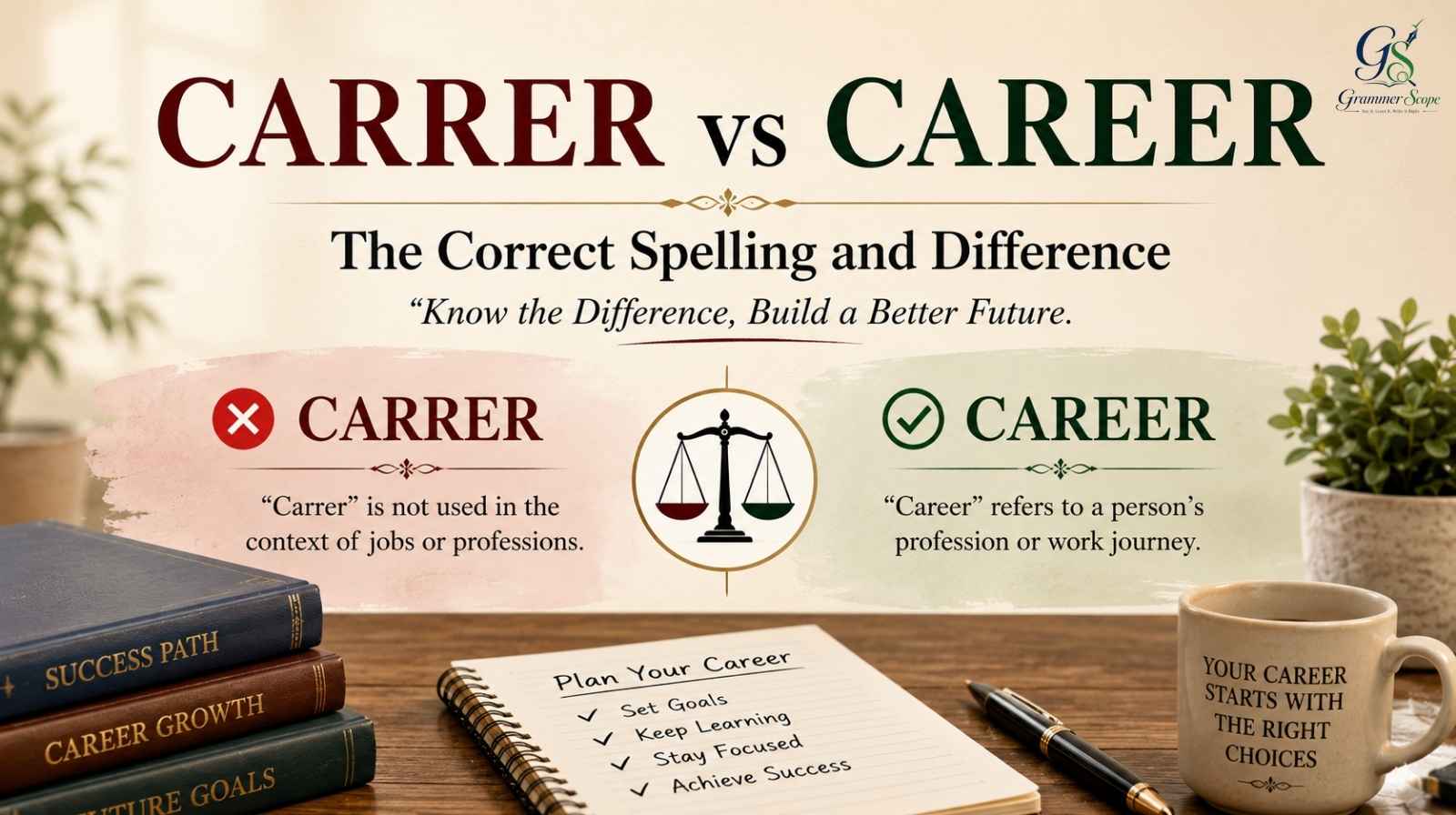
The primary difference between “carrer” and “career” is that career is the correct and commonly used English word related to a profession or long-term work path, while carrer is rarely used and is often a spelling error.
| Word | Meaning | Common Usage | Correct in Professional Writing? |
|---|---|---|---|
| Career | A profession or long-term occupation | Very common | Yes |
| Carrer | To move quickly or wildly | Rare | Usually No |
Quick Answer
If you are talking about jobs, professions, work growth, or employment, the correct spelling is always career.
For example:
- ✅ She wants a successful career in medicine.
- ❌ She wants a successful carrer in medicine.
Understanding the Meaning of “Career”
The word “career” refers to a person’s professional journey, occupation, or long-term work path.
Career Definition
According to major English dictionaries, a career is:
“An occupation undertaken for a significant period of a person’s life with opportunities for progress.”
Examples of Career in Sentences
- He built a successful career in software engineering.
- Choosing the right career path takes time.
- Her career goals changed after college.
- Many students seek career guidance before graduation.
Why “Career” Matters in Professional Communication
Using the correct spelling is extremely important because the word appears frequently in:
- CVs and resumes
- Cover letters
- LinkedIn profiles
- Job portals
- Academic applications
- Business communication
Even a minor spelling mistake can make a negative first impression.
What Does “Carrer” Mean?
Although many people think “carrer” is simply a typo, it is technically a real English word. However, it is very rare in modern usage.
Definition of Carrer
“Carrer” means:
To move rapidly or uncontrollably in a particular direction.
It is usually used in literary or old-fashioned English.
Examples of Carrer in Sentences
- The horse began to carrer down the hill.
- The car carrered across the road after losing control.
Why People Confuse Carrer With Career
The confusion happens because:
- Both words look almost identical.
- “Career” is typed frequently in professional writing.
- Fast typing often causes spelling errors.
- Autocorrect may not always detect the mistake.
However, in modern business and educational contexts, “career” is almost always the intended word.
Carrer vs Career: Which Spelling Is Correct?
The Correct Spelling for Jobs and Professions
If you are referring to employment, occupations, or professional growth, the correct spelling is:
✅ Career
Common Incorrect Usage
Many people accidentally write:
- Carrer goals
- Carrer opportunities
- Carrer development
- Carrer counseling
These are incorrect spellings.
Correct Usage
The correct forms are:
- Career goals
- Career opportunities
- Career development
- Career counseling
Easy Memory Trick
Think of it this way:
Your “career” needs two “e’s” because it helps you “earn” money.
This simple trick helps many learners remember the correct spelling quickly.
Why Spelling Errors Like “Carrer” Can Hurt Your Professional Image
Spelling mistakes may seem small, but they can impact credibility in professional environments.
First Impressions Matter
Recruiters and employers often review resumes within seconds. Errors such as “carrer objective” can immediately reduce trust.
Areas Where Spelling Is Critical
Resumes and CVs:
…..A spelling error can make your application appear careless.
LinkedIn Profiles:
…..Professional branding depends on accuracy and clarity.
Job Applications:
…..Employers expect strong communication skills.
Academic Writing:
…..Grammar and spelling influence grades and credibility.
2025–2026 Statistics on Resume and Grammar Mistakes
Recent hiring studies show how important accurate writing remains in professional communication.
Key Data
- Around 77% of recruiters reject resumes containing grammar or spelling mistakes.
- More than 60% of hiring managers consider spelling accuracy a sign of professionalism.
- AI-powered applicant tracking systems increasingly flag language errors automatically.
- LinkedIn profile optimization studies in 2025 show that professionally written profiles receive significantly more recruiter engagement.
These trends highlight why understanding the difference between “career” and “carrer” matters more than ever.
Credible References
Read More: Challenge or Challange: Which Is Correct? (2026 Guide)
Common Situations Where People Misspell “Career”
Typing Speed Errors
Many users type quickly and accidentally replace “ee” with “er.”
Example:
- Incorrect: carrer growth
- Correct: career growth
Pronunciation Confusion
Some non-native English speakers pronounce both words similarly, leading to spelling mistakes.
Autocorrect Limitations
Because “carrer” is technically a valid word, spell-check tools may not always correct it automatically.
Frequently Misspelled Career-Related Terms
| Incorrect | Correct |
|---|---|
| Carrer path | Career path |
| Carrer objective | Career objective |
| Carrer growth | Career growth |
| Carrer opportunities | Career opportunities |
| Carrer advice | Career advice |
How to Avoid the Carrer vs Career Mistake
Avoiding this spelling confusion is easier when you build simple proofreading habits.
1. Read Slowly Before Submitting
Always review important documents carefully.
Best Documents to Double-Check
- Resumes
- Emails
- Applications
- Essays
- LinkedIn summaries
2. Use Grammar Tools
Writing assistants can help detect mistakes quickly.
Helpful Tools
- Grammarly
- Microsoft Editor
- Google Docs Spell Check
These tools improve writing clarity and reduce spelling errors.
3. Memorize Common Professional Vocabulary
The more often you write the correct spelling, the easier it becomes to remember.
Practice Examples
- Career planning
- Career development
- Career opportunities
- Career success
- Career growth
4. Learn Through Repetition
Writing the correct word repeatedly improves memory retention.
For example:
- My career goals are clear.
- I want a successful career.
- Career growth requires patience.
Real-Life Example: How One Small Spelling Error Affected a Job Application
In 2025, a university graduate shared a story on a career forum about repeatedly applying for marketing jobs without receiving interview calls. After asking a mentor to review his resume, the issue became obvious immediately: the phrase “carrer objective” appeared at the top of the document.
Although the rest of the resume was strong, the spelling mistake created a poor first impression. The recruiter later explained that attention to detail is extremely important in marketing and communication roles. Even a small grammar issue can suggest carelessness.
The applicant corrected the mistake, improved several sections of the resume, and optimized his LinkedIn profile. Within two months, he started receiving interview invitations regularly. Eventually, he secured a digital marketing role at a growing technology company.
This example shows how a tiny spelling error can impact professional opportunities. While skills and experience matter most, presentation and writing accuracy still play a major role in modern hiring processes.
Career-Related Keywords You Should Know
Understanding related terminology can also improve your professional writing.
Common Career Vocabulary
Career Path:
The direction your professional life follows over time.
Career Development:
Improving skills and gaining experience for advancement.
Career Goals:
Professional achievements you want to accomplish.
Career Counseling:
Professional guidance for choosing suitable occupations.
Career Change:
Switching from one profession to another.
Using these phrases correctly improves communication and SEO relevance in professional content.
Read More: Pre vs Post: Correct Usage & Meaning Guide 2026
Mini Quiz: Carrer vs Career
1: Correct Profession Spelling
Fill in the blank:
_____ growth is important for success.
A) Carrer
B) Career
Answer: B) Career
2: Complete the Sentence
“She wants a successful _____ in medicine.”
Answer: Career
3: Resume Word Check
Which word is commonly used in resumes and job applications?
A) Carrer
B) Career
Answer: B) Career
4: Professional Life Meaning
“Career” is related to your _____ life.
Answer: Professional
5: True or False Challenge
“Carrer” is the correct spelling for job growth.
Answer: False
6: Career Counseling Fill in the Blank
“Career counseling helps students choose the right _____.”
Answer: Career
7: LinkedIn Profile Quiz
Which spelling looks professional on LinkedIn?
A) Career Objective
B) Carrer Objective
Answer: A) Career Objective
8: First Impression Quiz
A spelling mistake in a resume can create a bad _____ impression.
Answer: First
9: Double Letter Challenge
“Career” contains double _____.
Answer: E
10: English Spelling Check
“Career” is correct in both American and British English.
Answer: True
11: Career Change Quiz
“She changed her _____ after college.”
Answer: Career
12: Long-Term Profession Quiz
Which word means a long-term profession?
A) Career
B) Carrer
Answer: A) Career
13: Resume Tip Quiz
Always _____ your resume before submitting it.
Answer: Proofread
14: Growth and Skills Quiz
“Career growth requires patience and _____.”
Answer: Skills
15: Correct Development Spelling
Which spelling is correct?
A) Carrer Development
B) Career Development
Answer: B) Career Development
FAQs
Is “carrer” a real word?
Yes, “carrer” is technically a real English word meaning to move quickly or uncontrollably. However, it is rarely used in modern English.
Which spelling is correct for jobs and professions?
The correct spelling is career.
Example:
- ✅ Career growth
- ❌ Carrer growth
Why do people type “carrer” instead of “career”?
People usually make this mistake because of typing speed, pronunciation confusion, or lack of proofreading.
Can spelling mistakes affect job applications?
Yes. Recruiters often judge professionalism based on grammar and spelling accuracy.
How can I remember the correct spelling of career?
A simple trick is:
“Career helps you earn,” so remember the double “e.”
Does Grammarly detect the word “carrer”?
Sometimes yes, but not always. Since “carrer” is technically a valid English word, grammar tools may miss it depending on the sentence context.
Is “career” used in American and British English?
Yes. The spelling “career” is correct in both American and British English.
Conclusion
Understanding the difference between “carrer” and “career” is important for professional communication, academic writing, and everyday English usage. While “carrer” exists as a rare literary verb, “career” is the correct spelling when discussing jobs, professions, work goals, or employment growth.
Using the correct spelling improves credibility, professionalism, and confidence in resumes, LinkedIn profiles, emails, and applications. Even small writing mistakes can influence first impressions in competitive environments.
The next time you write about your professional journey, remember that the correct word is career.
If you found this guide helpful, consider bookmarking it and sharing it with students, job seekers, or anyone improving their English writing skills.
Ready to improve your English? Read more guides on Grammer Scope

Bilal Khalid is a professional blogger specializing in grammar guides and practical writing tips. He helps readers improve clarity, accuracy, and confidence in communication through simple explanations, actionable advice, and easy-to-follow strategies for everyday and professional writing.