By Jessie Middis
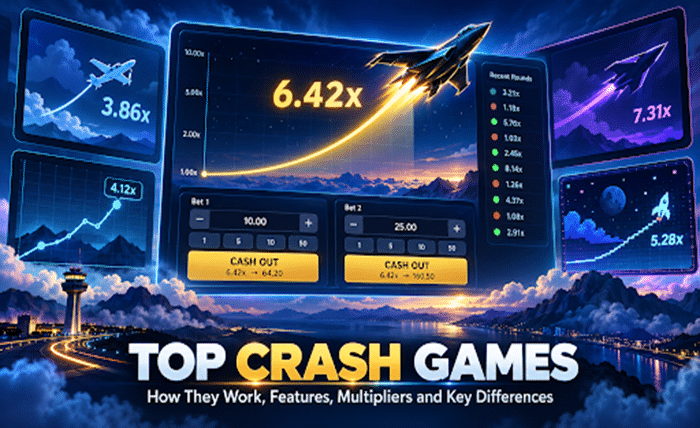
Crash games are fast-paced casino games built around a rising multiplier and a simple decision: cash out before the round ends. Unlike traditional slots, they usually do not rely on reels, paylines, or matching symbols. Instead, the main action happens in real time as the multiplier increases. Players looking at titles such as aviatrix demo are often trying to understand the game flow before using real money. That makes sense because crash games can look simple at first, but they differ in important ways. Some use one bet per round, others allow two. Some include auto cash-out, detailed history panels, social features, or more elaborate graphics. Popular examples on 1xBet include Aviatrix, Aviator, JetX, and Crash. They share the same broad crash-game idea, but the interface, visual style, automation tools, and betting structure can be quite different. The most useful way to compare them is not by asking which game “wins more.” A better comparison looks at mechanics, usability, multiplier behavior, mobile performance, and the information available about fairness and RTP.
What Are Crash Games?
Crash games are casino games where a multiplier starts low and increases during the round. The player places a bet before the round begins and tries to cash out before the game reaches its crash point. If the player exits in time, the payout is based on the stake multiplied by the value at cash-out. If the crash occurs first, the active bet is lost. This creates a different experience from traditional slots. There are usually no spinning reels or fixed paylines to watch. Instead, the player follows a live multiplier and decides when to leave the round.
How a Typical Crash Round Works
A standard crash round begins with a short betting phase. The player enters a stake and waits for the round to start. The multiplier then begins to rise, often from around 1.00x. It may climb slowly at first and then accelerate depending on the game design. At any point before the crash, the player can choose to cash out. If the round ends before that action is completed, the bet is lost. The round is usually short, which is why crash games can feel much faster than conventional casino titles.
Crash Games vs Traditional Slots
Traditional slots are mainly based on symbol combinations, paylines, ways to win, or cluster mechanics. Crash games replace that structure with a real-time multiplier. Slots usually calculate a complete result immediately, even if an animation takes several seconds. Crash games present the result as an unfolding event. Another difference is interaction. In many slots, the player starts the round and waits. In a crash game, the player often decides when to cash out. That added decision makes the game feel more active, although it does not remove the underlying role of chance.
Top Crash Games to Know
Several crash games stand out because of their distinct presentation and feature sets.
Aviatrix
Aviatrix uses an aviation theme and a rising multiplier mechanic. The game centers on an aircraft-style visual that continues while the multiplier increases. The player can cash out before the round ends. One reason Aviatrix stands out is its more polished presentation. Compared with simple graph-based crash games, it uses a stronger visual identity and more detailed animation. Its interface is designed around fast decisions, so the multiplier and cash-out controls need to remain easy to read. On mobile, this becomes particularly important because the player has less screen space and relies on touch controls.
Aviator
Aviator is one of the best-known crash games in the category. Its visual concept is simple: a plane rises while the multiplier increases. The player can cash out before the aircraft disappears. The interface is deliberately minimal. This makes the main information easy to follow even during fast rounds. Aviator also helped popularize social elements in crash games. Depending on the version, players may see other bets, previous results, or live activity. Its main strength is clarity rather than visual complexity.
JetX
JetX uses a jet and arcade-style presentation. The core mechanic is familiar: the multiplier rises, and the player must cash out before the round ends. One of its more useful features is the ability to place two bets during the same round. This creates more flexibility because the player can use different stake sizes or cash-out targets. JetX also commonly includes Auto Bet and Auto Collect tools. These features automate parts of the process, but they do not alter the underlying game probability.
Crash
Crash is a more minimalist version of the format. Instead of focusing on an aircraft or themed animation, it often uses a simple rising curve or graph. This makes the multiplier itself the main visual element. Some versions support two independent betting panels, which allows different bets to be managed at the same time. The design is more functional than decorative, which may appeal to players who prefer a clean interface.
Comparison of Popular Crash Games
The main differences between these titles are related to presentation and control options.
| Game | Main Theme | Core Mechanic | Two Bets | Auto Cash-Out | Visual Style |
| Aviatrix | Aviation | Rising multiplier | Version-dependent | Version-dependent | Detailed aircraft theme |
| Aviator | Aviation | Rising multiplier | Version-dependent | Common | Minimal flight style |
| JetX | Jet / arcade | Rising multiplier | Yes | Yes | Pixel / arcade-inspired |
| Crash | Graph / curve | Rising multiplier | Often yes | Version-dependent | Minimalist |
This table should not be read as a ranking of profitability. A game with more features is not automatically more favorable mathematically.
How Aviatrix Works
Aviatrix follows the standard crash-game structure but uses a stronger aviation theme.
Basic Round Structure
Before the round begins, the player enters a stake. Once the round starts, the multiplier rises while the aircraft remains in play. The player can cash out at any point before the crash. If the cash-out is successful, the payout is calculated from the current multiplier. If the game ends first, the active stake is lost.
What Makes Aviatrix Different
The main difference is presentation. Aviatrix uses a more visual aircraft-based environment than simple graph-driven crash games. This makes the experience more animated, but the important gameplay information still comes from the multiplier, cash-out control, and round timing. The visual theme does not change the basic probability concept.
Aviatrix on Mobile
Crash games need responsive mobile interfaces because timing is central to the experience. Aviatrix should keep the multiplier visible, the cash-out button easy to reach, and the betting controls large enough for touch input. Connection stability also matters. A poor connection can make the interface feel delayed, even though the actual game result may already have been processed on the server.
How Multipliers Work in Crash Games
The multiplier is the central mechanic in almost every crash title.
Starting Multiplier
Most crash rounds start around 1.00x. The multiplier increases while the round continues. A player who cashes out at 1.50x receives a lower return than someone who exits at 3.00x, but waiting longer also means greater exposure to the crash point.
Cash-Out Multiplier
The basic payout formula is simple:
Stake × Cash-Out Multiplier = Payout
For example, a $10 stake cashed out at 2.00x produces a $20 payout. That does not mean the game is easier at lower multipliers. It simply changes the balance between earlier exits and the risk of waiting longer.
Maximum Multipliers
Some crash games publish a maximum possible multiplier. This number can be very large. However, the maximum should not be confused with a typical result. A theoretical ceiling says little about how frequently that level appears.
Manual Cash-Out vs Auto Cash-Out
Crash games often offer both manual and automatic exit options.
Manual Cash-Out
Manual cash-out gives the player full control over when to leave the round. This makes the game more interactive. The drawback is that the player must watch the multiplier closely. Fast rounds can make reaction time and interface responsiveness important.
Auto Cash-Out
Auto cash-out allows the player to choose a target multiplier in advance. When that value is reached, the system automatically closes the bet. For example, a player may set auto cash-out at 2.00x. If the multiplier reaches that level, the bet closes automatically. This can make play more consistent, but it does not improve the mathematical odds.
One Bet vs Two-Bet Systems
Some crash games allow two simultaneous bets. This is a meaningful design difference because it changes how the player can structure a round.
Why Some Crash Games Allow Two Bets
With two independent betting panels, the player can choose different stakes and different cash-out targets. For example, one bet may use an earlier exit while the second remains active longer. This adds flexibility but also increases the total amount exposed during the round.
Example: JetX and Crash
JetX is well known for allowing two bets in the same round. Crash-style games on 1xBet may also provide two separate betting panels. The feature is useful for comparing different cash-out approaches within one round, but it does not create a mathematical advantage by itself.
RTP, House Edge and Crash Games
RTP is still relevant even when a game does not use reels or paylines.
What RTP Means
RTP stands for Return to Player. It describes the theoretical percentage returned over a very large number of rounds. It does not predict what will happen during one session. A player can experience results far above or below the theoretical figure over a short period.
Why RTP Can Differ Between Crash Games
Different crash games can use different mathematical models. Providers may apply different probability distributions, house edges, maximum multipliers, or configuration settings. As a result, two games with similar interfaces can still have different RTP values.
Why You Should Check the Exact Version
Some games can be offered with multiple settings. That means an RTP value found on one site may not automatically apply to another version. The best source is the technical information shown inside the exact game being used.
Provably Fair and RNG Systems
Crash games can use different systems to generate outcomes.
What Provably Fair Means
Provably fair systems use cryptographic methods that allow the player to verify that a result was not altered after the bet was placed. This is different from simply trusting a random result. The user may be able to compare hashes, seeds, or other verification data.
RNG-Based Crash Games
Other crash titles use conventional RNG systems. These systems generate outcomes according to predefined mathematical rules. The important point is that the technical method can differ from one provider to another.
Why Fairness Does Not Mean Predictability
A result can be fair and still be unpredictable. Fairness means the outcome was generated according to the intended rules. It does not mean previous results can be used to forecast the next crash point.
Can Previous Crash Results Predict the Next Round?
Crash games often show recent multiplier history. This is useful for reviewing past results, but it should not be treated as a forecasting tool.
Why Result Histories Look Like Patterns
Random sequences naturally create clusters. You may see several low multipliers in a row, followed by a very high one. That can create the impression that the game follows a pattern. In reality, the sequence may simply reflect normal random variation.
Gambler’s Fallacy
The gambler’s fallacy is the belief that past outcomes force future results to balance. For example, several low crashes do not mean a high multiplier is now due. Likewise, a very high multiplier does not guarantee that the next round will be low.
Why Prediction Systems Are Unreliable
Systems based on recent multiplier history cannot reliably predict independent outcomes. Charts, streaks, and previous round sequences may look meaningful without providing a real forecasting advantage.
Main Features to Compare in Crash Games
Crash games should be compared by practical features rather than claims about profitability.
Game Speed
Round speed can vary. Some games use short countdowns and fast multipliers, while others give the player more time. Faster games may feel more intense and can lead to more rounds in the same period.
Interface
The multiplier should be easy to read. The cash-out button should remain visible and responsive. Recent results, bet size, and automatic settings should also be clear. A confusing layout is a bigger problem in crash games than in slower casino formats.
Automation
Auto Bet and Auto Cash-Out are common features. Auto Bet can repeat the same stake automatically. Auto Cash-Out closes the bet at a predefined multiplier. These tools improve convenience but do not change the game mathematics.
Social Features
Some crash games include chat, live player lists, recent wins, or leaderboard-style information. These features make the game feel more social. They should not be confused with signals about what the next round will do.
Crash Games on Mobile
Crash games work well on smartphones because the basic interface is relatively simple.
Android and iOS
Many titles run directly in mobile browsers. Others can also be accessed through casino apps. The main requirement is that the interface adapts properly to the smaller screen.
Portrait vs Landscape
Portrait mode is convenient for one-handed use. Landscape mode provides more space for betting panels, history, and chat. The better option depends on how much information the game displays at once.
Connection Stability
A stable connection is important because crash rounds are fast. If the interface lags, the player may feel that the cash-out action was delayed. This is a usability issue, not necessarily a change in the underlying result.
Demo Crash Games vs Real Money Play
Demo mode is useful for learning how a crash game works.
What Demo Mode Is Useful For
A demo can help the player understand the betting controls, multiplier behavior, auto cash-out settings, and round speed. It also makes it easier to compare interfaces between games without using real money.
What Demo Mode Cannot Show
Demo results cannot reveal a profitable pattern. A strong sequence in demo mode does not mean similar results will appear later in real-money play. The purpose of demo mode is to learn the mechanics, not predict future rounds.
Common Crash Game Mistakes
Crash games look simple, but several common mistakes can make them difficult to manage.
Waiting for a “Due” High Multiplier
A run of low multipliers does not force the next round to be high. Previous results do not create a guarantee.
Cashing Out Based on Emotion
Fast rounds can encourage reactive decisions. A player may wait longer after a loss or exit too early after a previous bad result. These reactions are emotional rather than mathematical.
Increasing Stakes After Losses
Increasing the stake to recover previous losses does not improve the probability of the next round. It simply increases the amount at risk.
Ignoring Auto Cash-Out Settings
Automatic tools are useful only if they are configured correctly. A forgotten target can produce a result the player did not intend.
Comparing Games Only by Maximum Multiplier
A huge maximum multiplier can look impressive. That does not mean it appears frequently or makes the game better overall. Interface, RTP, rules, and usability are more useful comparison points.
How to Compare the Top Crash Games
The best way to compare crash games is to focus on features that directly affect usability. Look at the number of simultaneous bets, auto cash-out tools, round speed, mobile layout, recent-result history, and fairness information. RTP should also be checked where it is published. A visually impressive game may be less convenient than a simpler title with clearer controls. Likewise, a very high maximum multiplier does not automatically make one game better than another.
Top Crash Games: Practical Comparison
| Factor | Aviatrix | Aviator | JetX | Crash |
| Learning curve | Low | Low | Low | Very low |
| Visual complexity | Medium | Low | Medium | Low |
| Fast rounds | Yes | Yes | Yes | Yes |
| Two-bet option | Version-dependent | Version-dependent | Yes | Often yes |
| Auto features | Version-dependent | Common | Yes | Version-dependent |
| Mobile-friendly | Yes | Yes | Yes | Yes |
Aviatrix is the more visually detailed option, while Aviator and Crash lean toward simpler interfaces. JetX stands out for its dual-bet and automation features.
Frequently Asked Questions
1.What Are the Top Crash Games?
Popular crash games include Aviatrix, Aviator, JetX, and Crash. Their main differences are interface design, automation tools, bet structure, and presentation.
2.How Does Aviatrix Work?
The player places a stake before the round starts. The multiplier rises while the aircraft remains active, and the player must cash out before the crash.
3.Is Aviatrix a Slot?
Aviatrix is better described as a crash game than a traditional slot. It uses a rising multiplier and cash-out mechanic instead of normal reels and paylines.
4.What Is the Difference Between Aviatrix and Aviator?
Both use an aviation theme, but Aviatrix generally has a more detailed visual presentation, while Aviator uses a simpler and more minimal interface.
5.How Is JetX Different From Other Crash Games?
JetX combines a jet-themed presentation with two simultaneous betting panels and automation tools such as Auto Bet and Auto Collect.
6.Can Crash Game Results Be Predicted?
There is no reliable way to predict independently generated crash points from previous rounds.
7.Does Auto Cash-Out Improve the Odds?
No. Auto cash-out only automates the exit point. It does not change the underlying probability.
8.Can Crash Games Be Played on Mobile?
Yes. Many modern crash games work in mobile browsers or through casino apps on Android and iOS.
Conclusion
Crash games share the same basic idea: a multiplier rises until the round ends, and the player must cash out before that happens. Aviatrix, Aviator, JetX, and Crash approach this format differently. Aviatrix focuses on a more detailed aviation theme. Aviator uses a simple flight-based interface. JetX adds dual betting and strong automation tools. Crash keeps the presentation minimal and centered on the multiplier itself. The most useful comparison is based on interface quality, automation, round speed, mobile usability, fairness information, and published RTP. Maximum multipliers and recent results should not be treated as proof that one game offers better odds. A title can look more exciting without being mathematically more favorable. For anyone comparing the top crash games, understanding the exact rules and controls is more useful than looking for a game that supposedly produces more wins.